
Entropy, Childhood, and Mental Flexibility
How to Change Your MindNeuroscience and developmental psychology converge on the possibility that adult order narrows thought, while temporary flexibility can support learning and change.
increasing Bearing strength in each event
 decreasing
Bearing strength in each eventdecreasingThe Adult Mind’s Order

Prediction and Stability
The brain reduces uncertainty
The adult mind relies on prior experience to interpret incoming signals efficiently. This process supports planning and survival but can make familiar expectations difficult to escape.
Order has a price
A stable sense of self offers continuity while encouraging repetitive thought. The book asks whether some forms of suffering reflect too much rigidity rather than too little order.
A High-Entropy State
Less Specialized Communication
Temporary disorganization
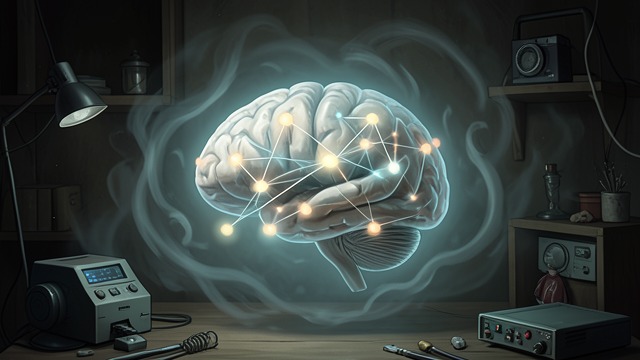
Psychedelic imaging suggests that established networks become less distinct and communication across brain regions increases. Researchers describe this as elevated entropy.
A space for alternatives
The change may allow new associations and interpretations. It also produces confusion and error, so expanded possibility is not automatically insight.
Children’s Lantern Awareness
A Different Childhood Mind
Diffuse attention
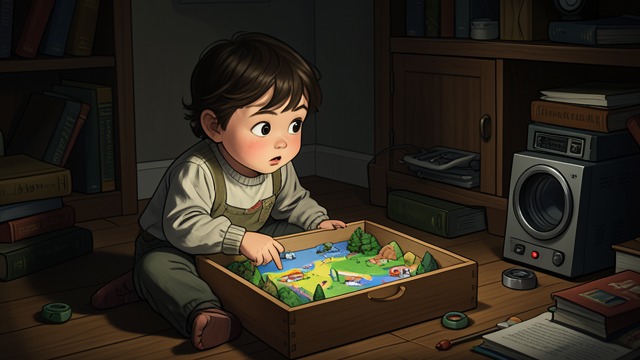
Alison Gopnik contrasts children’s broad lantern-like awareness with adults’ focused spotlight. Young children have fewer prior assumptions and may explore a wider space of possibilities.
Childhood as exploration
Their flexibility supports learning, including solving problems that experience can obscure for adults. The comparison reframes children as cognitively different, not simply deficient.
The Search for Novel Solutions

Hot and Cold Searches
Experience narrows options
Adults often select the most probable answer based on past success. Children and psychedelic participants may test unlikely possibilities more readily.
Creativity requires risk
A wider search can yield original solutions but also more mistakes. The book links mental diversity to a useful supply of variation rather than a guaranteed path to truth.
A Case for Neural Diversity

More Than One Mental Mode
No single ideal state
Focused adult thought is valuable, but it is not the only form of consciousness worth having. Childhood, meditation, and psychedelic states offer different cognitive capacities.
Variation as resource
Pollan argues for preserving access to more than one mental style. The goal is not permanent disorder but a broader repertoire for meeting unfamiliar problems.
During the account of the default network
During the entropic-brain discussion
During Alison Gopnik’s developmental account
During the problem-solving examples
In the epilogue
